Find My Balance
A tightrope balancing game with a musical twist.
Built for a one-week assignment, this tightrope-walking simulation, built in PlayCanvas, uses exaggerated balance physics to recreate the feeling of actually standing on a real rope. Every step makes the line dip and sway, and the camera subtly shifts with your movement, so you're constantly aware of how easily things can go off-balance. The rope's reactions, the footstep timing, and the camera tilt all work together to keep you on edge as you try to stay upright.
The exaggerated swaying also plays into a larger metaphor — walking the tightrope of life. Every little adjustment matters, and you're always trying to find that sweet spot between leaning too far or correcting too hard. It turns the simple act of moving forward into a small, symbolic reminder of balance, patience, and staying steady even when things feel unstable.
Onboarding Design
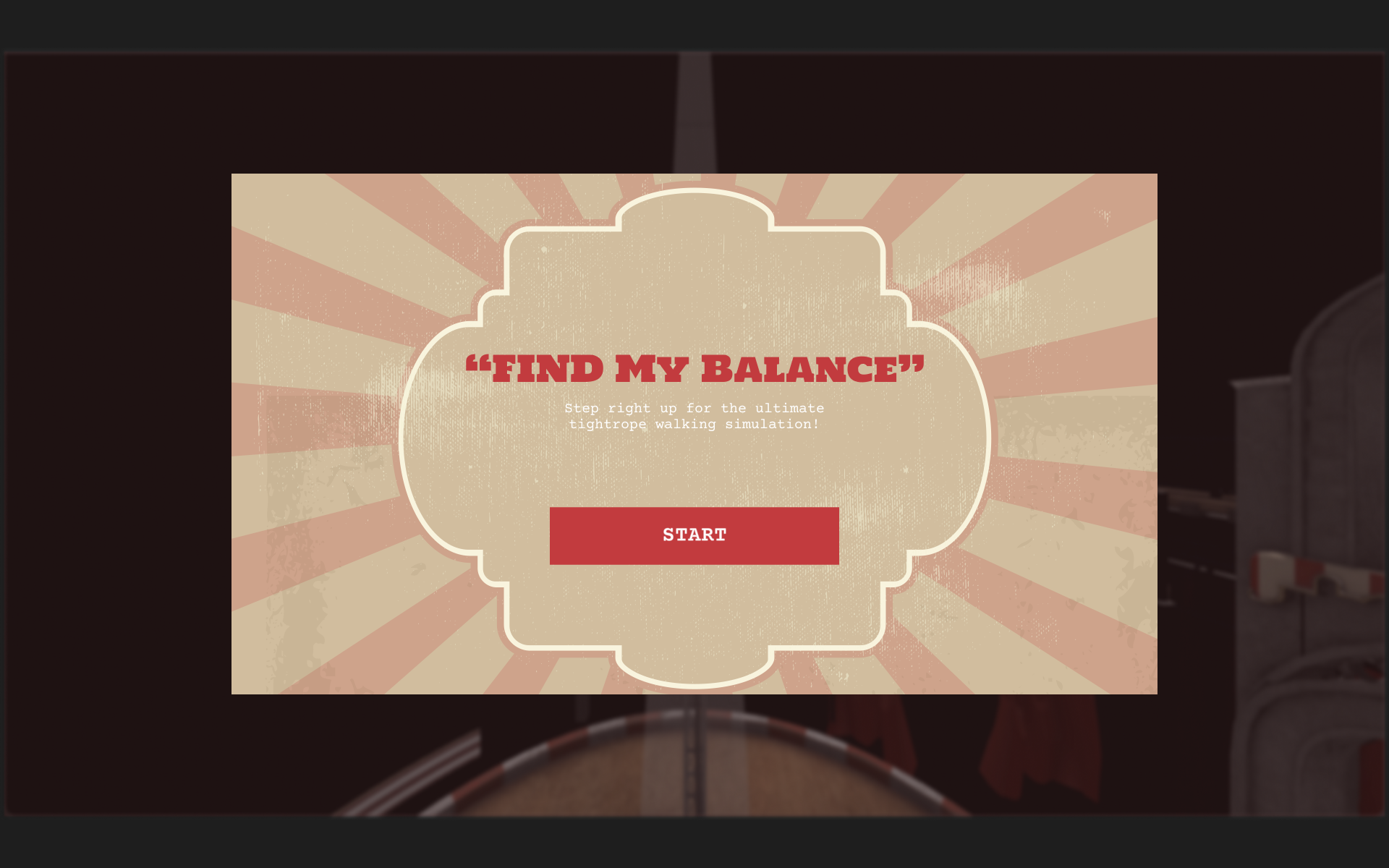
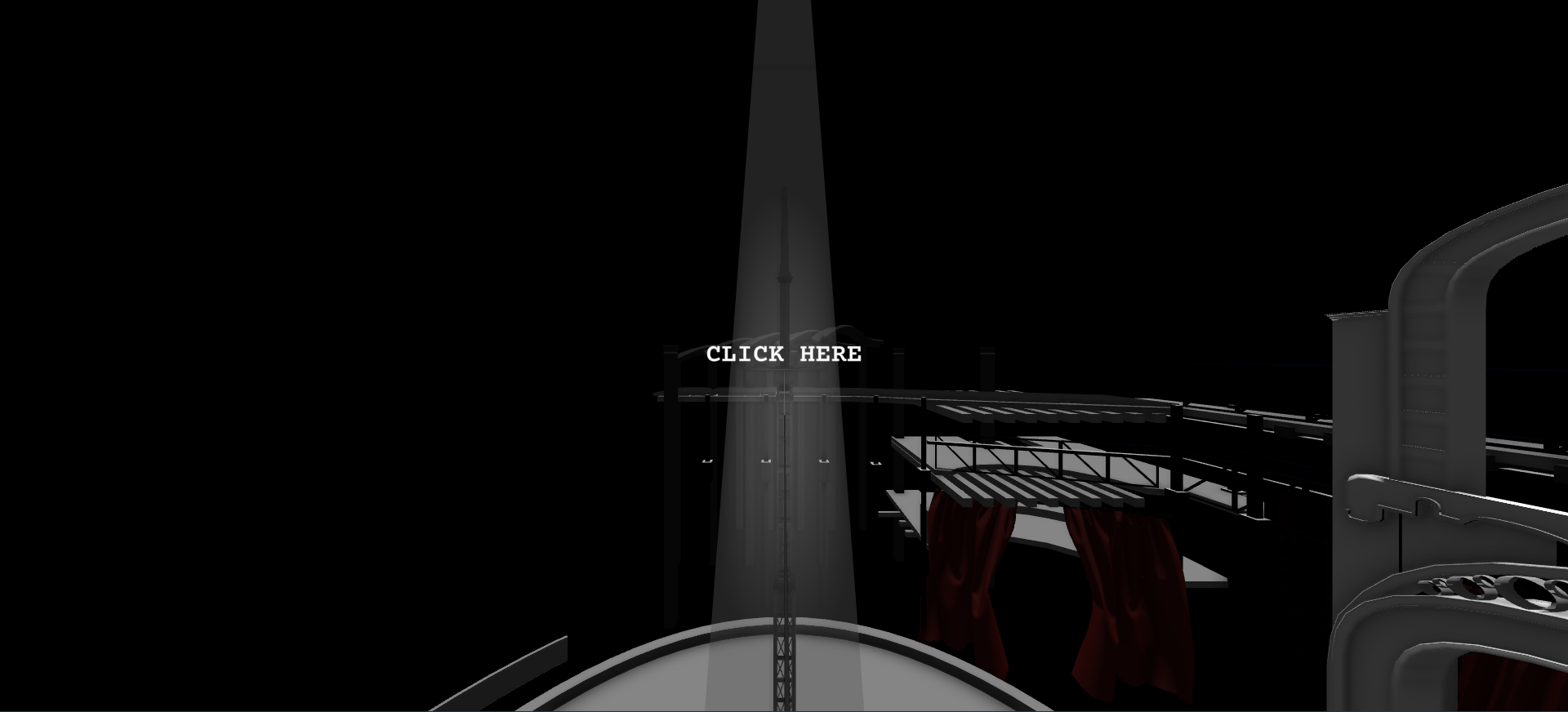
Landing
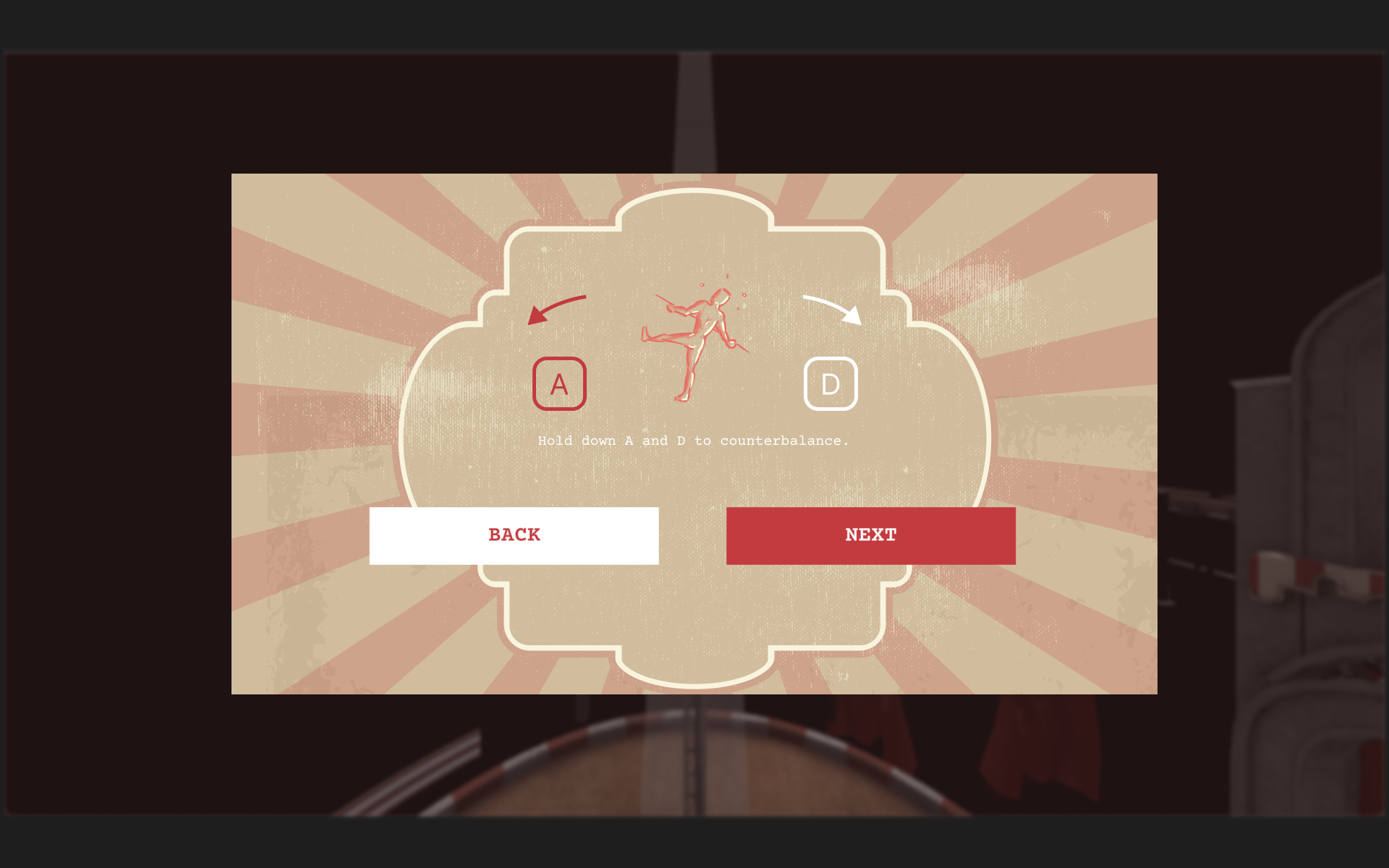
Hold to Counter Balance Left
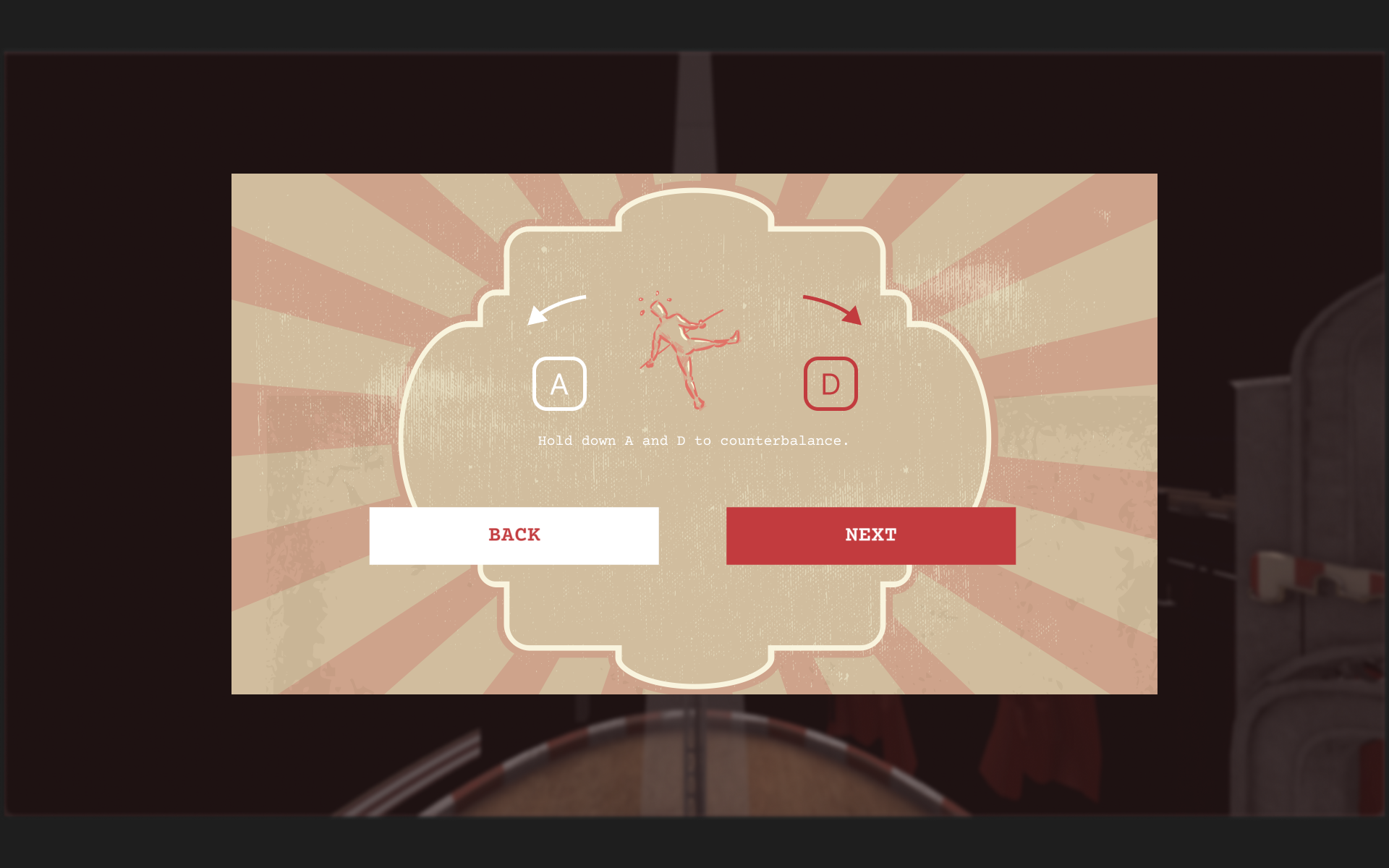
Hold to Counter Balance Right
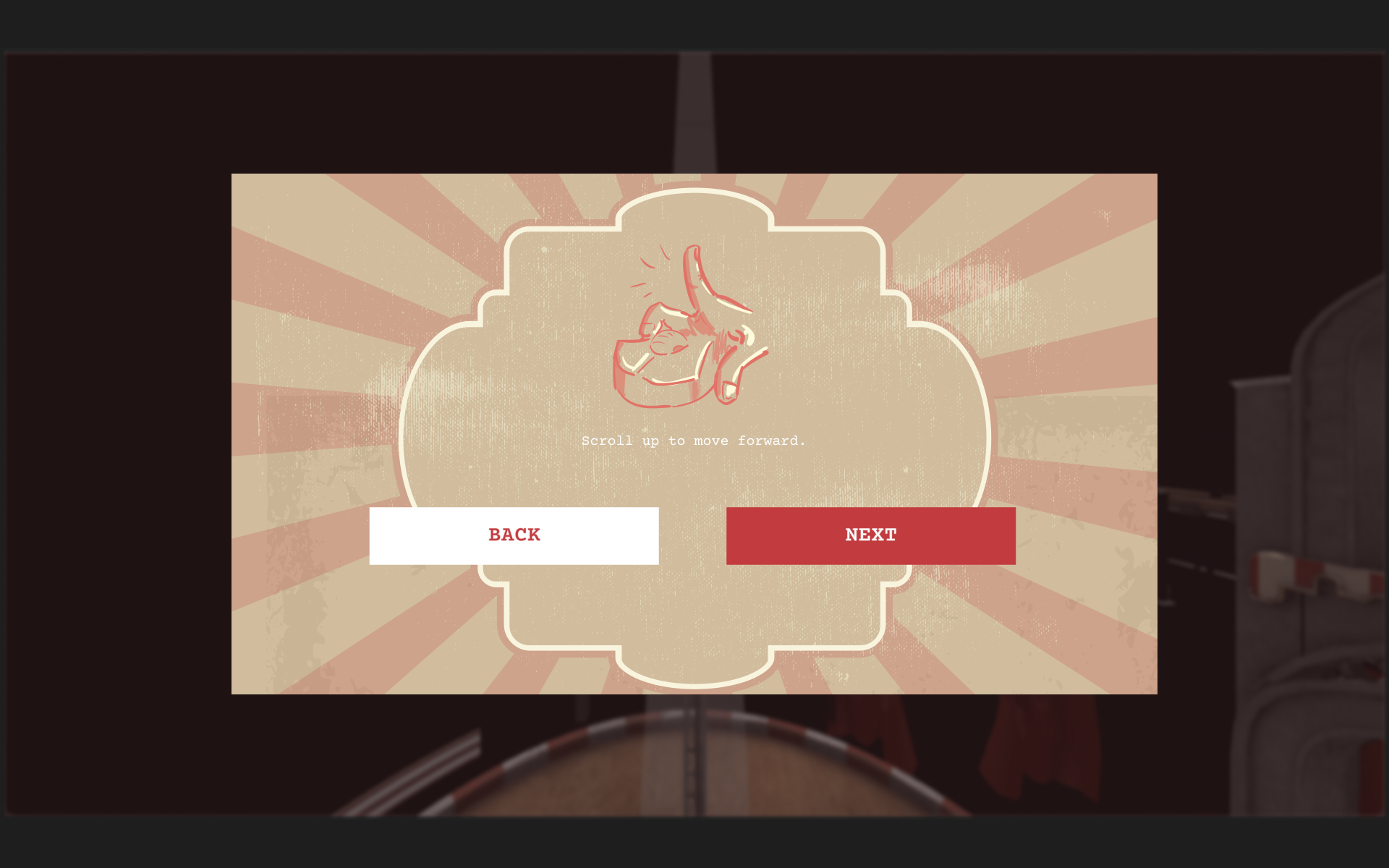
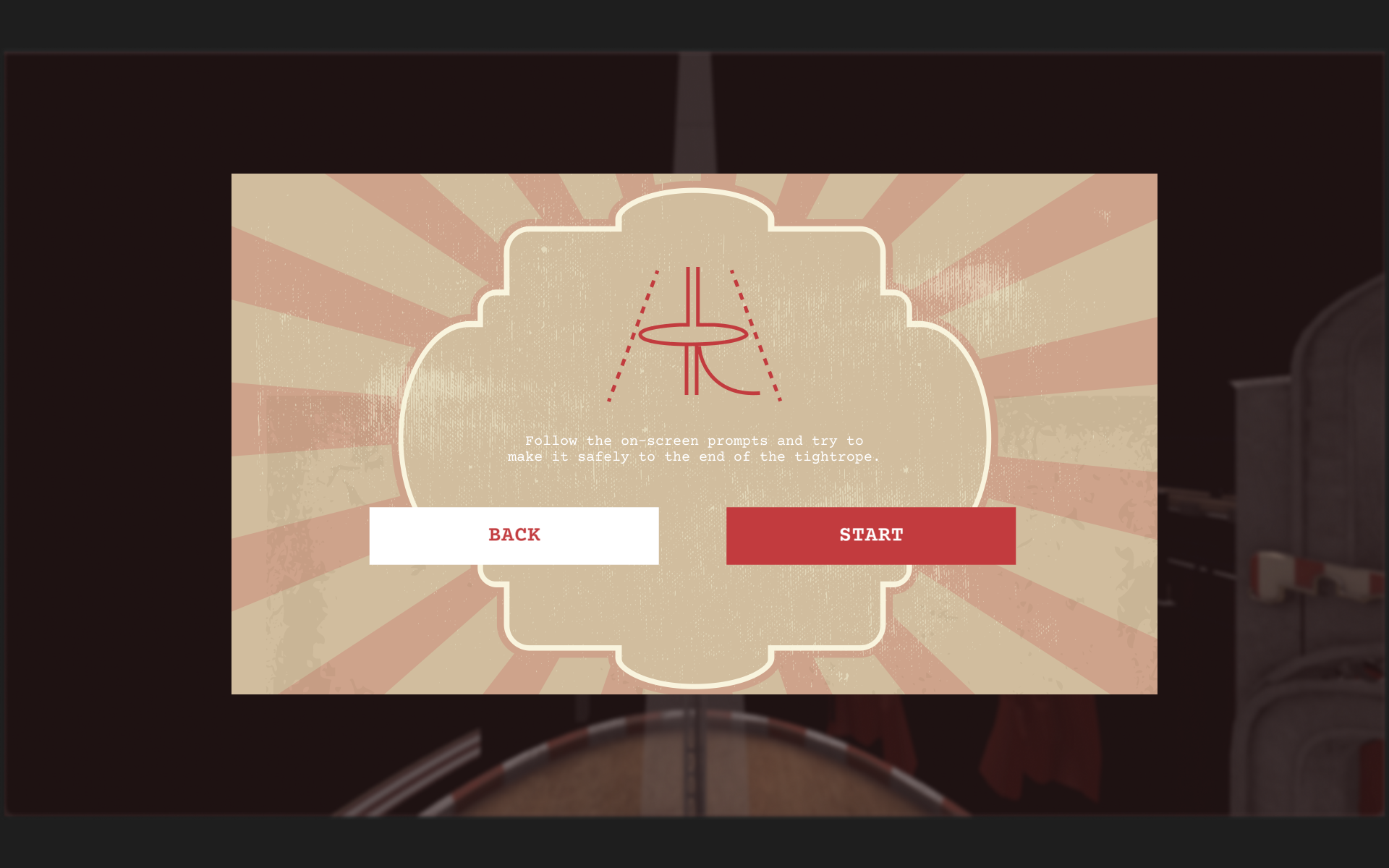
Scroll Up to Move Forward
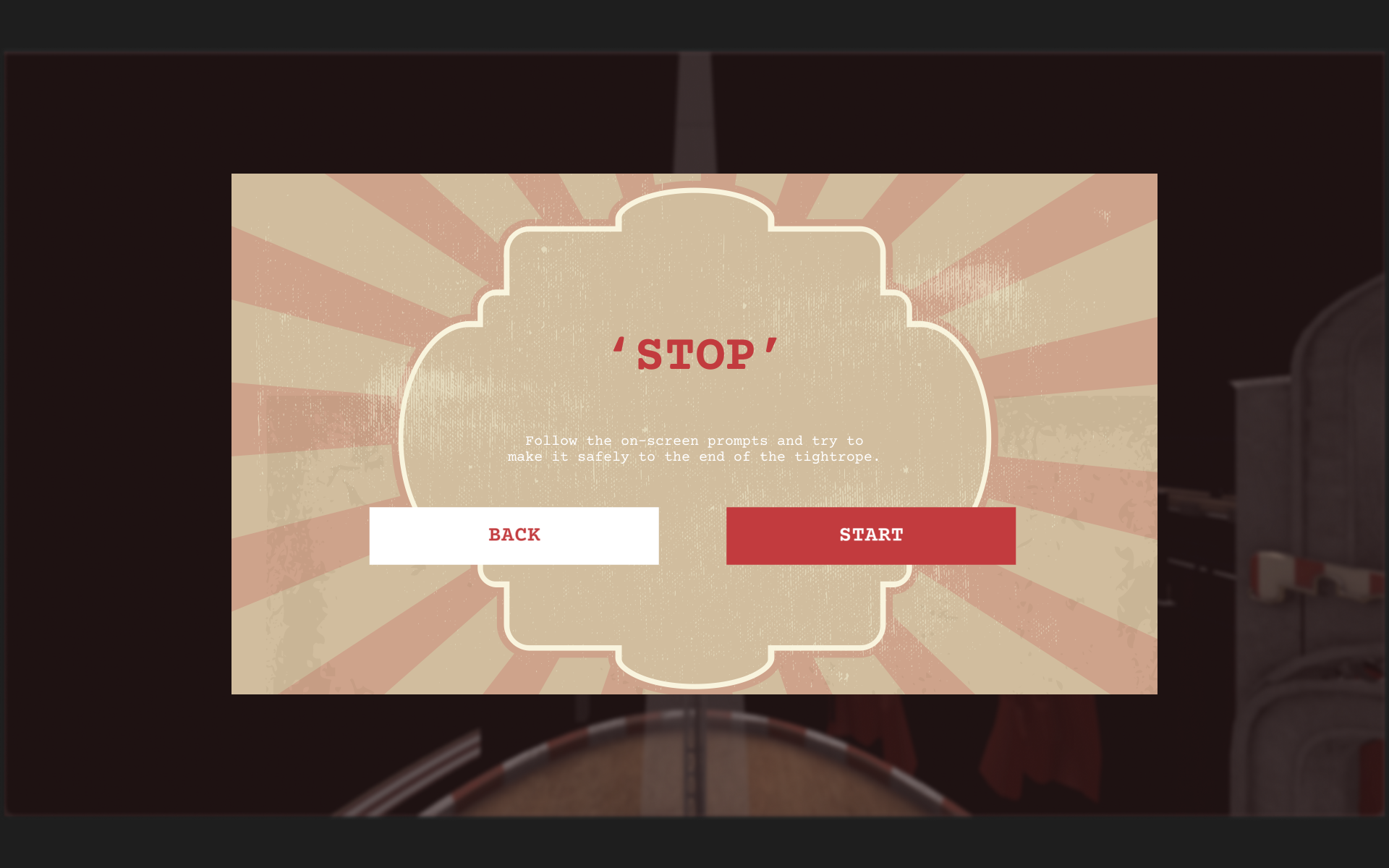
Follow the On-screen Prompts (e.g. 'STOP' to pause)
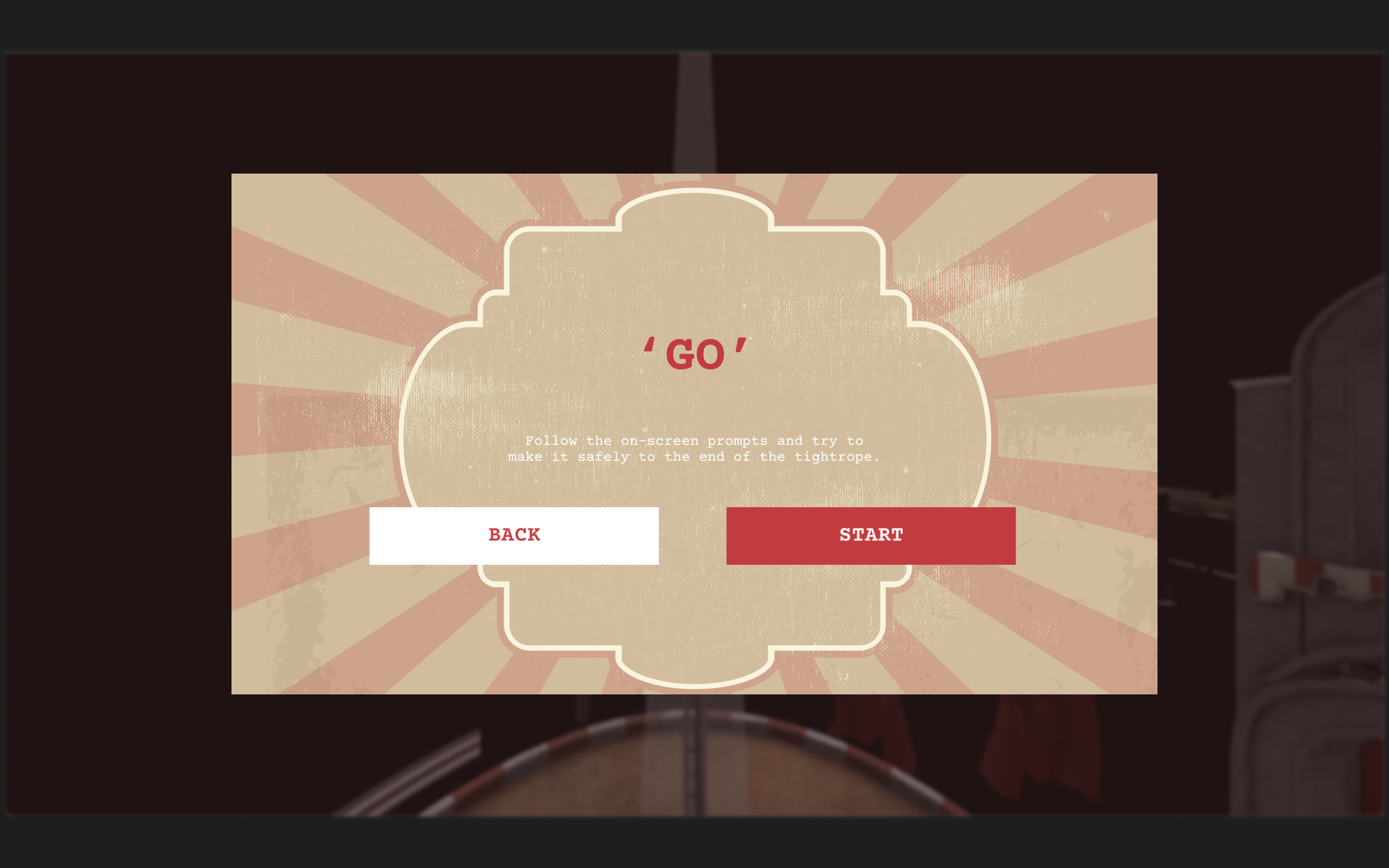
Follow the On-screen Prompts (e.g. 'GO' to take the next step)
Simulation End Point
A key challenge with the simulation was that players arrived with no context for how to interact with it. Without guidance, the controls — mouse scrolling to move forward, holding keys to counterbalance — were not intuitive enough to discover on their own.
Rather than front-loading all the controls at once, the onboarding was designed to introduce them progressively: one mechanic at a time, exactly when the player needs it. This decision was driven by two goals — reducing visual clutter at the start, and allowing players to learn through doing rather than reading. Each prompt references familiar real-world interactions — keyboard key presses and mouse scroll gestures — so the learning curve feels natural rather than arbitrary.
After the game was built, informal testing with users confirmed that the progressive onboarding allowed players to pick up the controls quickly and move through the simulation without confusion or the need for external explanation.